TB-500 vs BPC-157: What’s the Difference?
TB-500 and BPC-157 are named together so often, and sold together as the "Wolverine" blend, that they are easy to mistake for relatives. They are unrelated peptides with different origins, lengths and literatures.
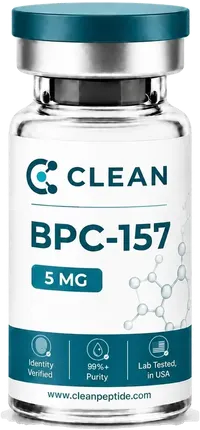
BPC-157 is a 15-residue peptide, GEPPPGKPADDAGLV, described by its Zagreb discoverers as a fragment of a larger protein from human gastric juice. Almost all of its literature is rat studies from that one group.
TB-500 is a 7-residue peptide, Ac-LKKTETQ: the acetylated actin-binding region of thymosin beta-4. Its own literature is mostly analytical; most "thymosin beta-4" research used the full 43-residue protein.
In short: one is a gastric-protein fragment, the other a cytoskeletal-protein fragment. Neither is approved anywhere, and both are on WADA's Prohibited List.
TB-500 vs BPC-157 at a Glance
BPC-157 is a 15-residue peptide (C62H98N16O22, 1,419.5 g/mol) with free termini; TB-500 is a 7-residue peptide with an acetylated N-terminus (C38H68N10O14, 889.0 g/mol). They share no sequence and come from unrelated proteins.
| Comparison | BPC-157 | TB-500 |
|---|---|---|
| Peptide length | 15 amino acids | 7 amino acids |
| Molecular weight | 1,419.5 g/mol | 889.0 g/mol |
| Sequence | GEPPPGKPADDAGLV | Ac-LKKTETQ |
| Molecular relationship | Fragment of a gastric-juice protein | Thymosin β4 residues 17–23, acetylated |
| Main research focus | Rat tissue-injury and gut models | Actin binding; doping-control analytics |
| Research evidence | Mostly animal studies; small uncontrolled human reports | Analytical and a few animal studies |
| FDA-approved drug component | No | No |
What are BPC-157 and TB-500
15 AA
BPC-157
A linear 15-residue peptide with free termini, described as a partial sequence of the gastric-juice protein "BPC".
Research areas
Tendon and ligament models • Gut lesion models • Angiogenesis assays • Wound models
Most published work comes from Predrag Sikirić's group in Zagreb. In rats and dogs the intact peptide had an elimination half-life of under 30 minutes and was quickly broken into small fragments (He et al., 2022).
Explore BPC-1577 AA
TB-500
The N-acetylated actin-binding motif of thymosin beta-4, identified in TB-500 products by mass spectrometry in 2012.
Research areas
Actin-binding motif • Cell migration assays • Doping-control detection • Rat tendon model
TB-500 is not full-length thymosin beta-4 (43 residues, CAS 77591-33-4). In 2024 the TB-500 metabolite Ac-LKKTE, not the parent peptide, was the one active in fibroblast scratch assays, and FDA found no human studies of TB-500 itself.
Explore TB-500Thymosin β4: 43 AAResidues 17–23: LKKTETQTB-500: Ac-LKKTETQ, 7 AA
TB-500 ≠ full-length thymosin β4; BPC-157 is unrelated
Key Differences Between BPC-157 and TB-500
| Key differences | BPC-157 | TB-500 |
|---|---|---|
| Origin | Partial sequence of a protein isolated from human gastric juice (Sikirić et al., Zagreb). |
Residues 17–23 of thymosin beta-4, the main G-actin-sequestering peptide in cells, with an added N-terminal acetyl. |
| Structure | 15 residues, free N- and C-termini, four prolines. |
7 residues, acetylated N-terminus, free C-terminus. |
| What the research used | BPC-157 itself, mostly in rats, from one research group. |
Mostly the full thymosin beta-4 protein; TB-500 itself appears mainly in analytical and doping-control studies. |
| Human data | Small uncontrolled reports from one US clinic group; no published randomised trial. |
None for TB-500. Full-length thymosin beta-4 had phase 2 trials (venous ulcers, dry eye). |
| Tested together | Rat Achilles tendon repair study, 2026: BPC-157, TB-500 and both. |
Same study. |
| Regulatory status | Not approved. FDA 503A category 2 from September 2023, later nominated-but-withdrawn; WADA S0. |
Not approved. Same FDA history; WADA S2 ("thymosin-β4 and its derivatives, e.g. TB-500"). |
How their research profiles differ
- BPC-157
- 15-AA gastric-protein fragment
- Rat tissue-injury models
- One research group, few human data
- TB-500
- 7-AA thymosin β4 fragment
- Actin-binding motif
- Mostly analytical literature
TB-500 vs BPC-157: Which Is Better?
There is no basis for ranking them. They are different molecules studied in different ways, and only one published study has put them side by side: a 2026 exploratory rat study of repaired Achilles tendons with four groups (control, BPC-157, TB-500 and both), measuring load to failure and histology at four weeks.
The stronger point of comparison is the evidence itself. BPC-157 has a large animal literature from one group; TB-500 has little research of its own, and much of what is attributed to it was done with full-length thymosin beta-4.
Is the model about the gastric pentadecapeptide BPC-157, or about thymosin beta-4's actin-binding motif?
Can BPC-157 and TB-500 Be Studied Together?
Yes, and that is the design of the only head-to-head study: separate BPC-157 and TB-500 groups plus a combined group, so the effect of each can be separated from the effect of both.
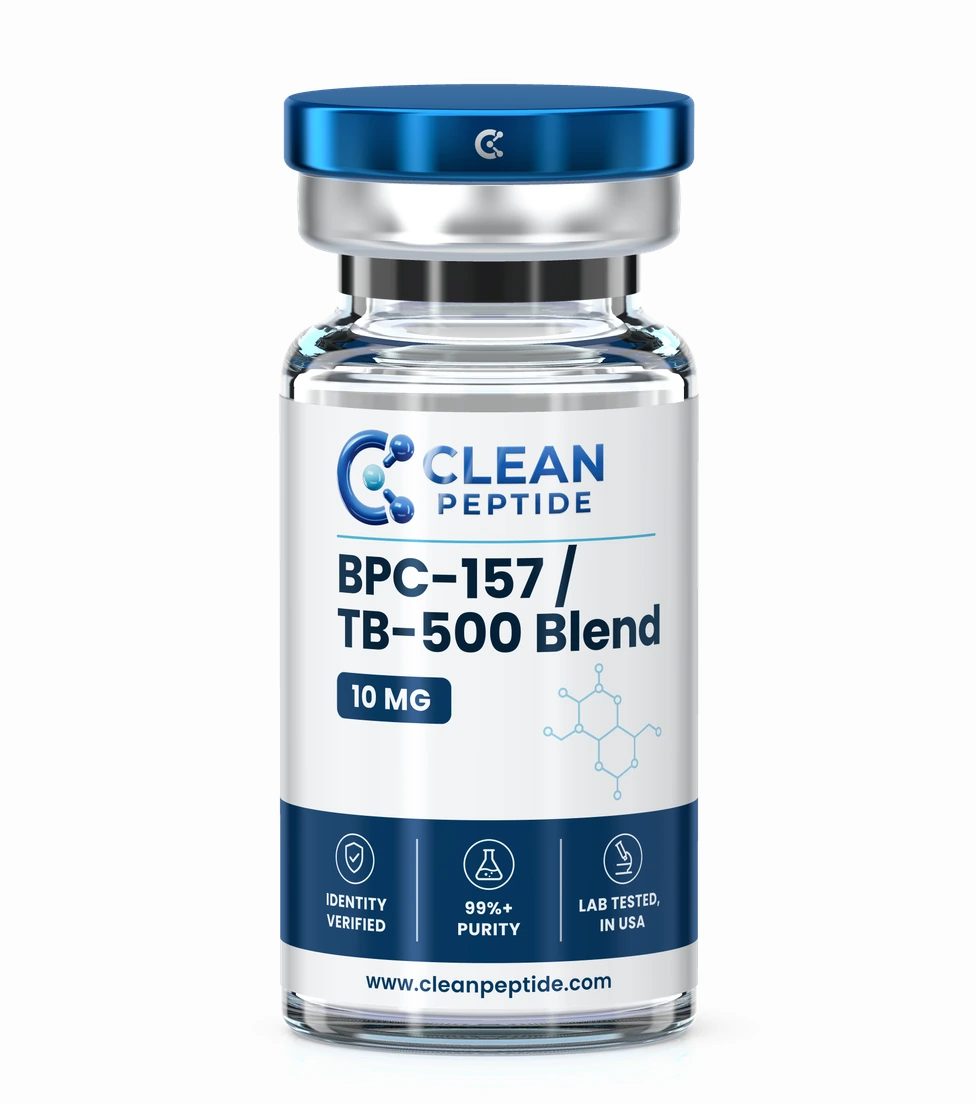
Clean Peptide also stocks the two as a single-vial blend, the "Wolverine" blend, with a certificate that measures each peptide's content separately. See the Wolverine stack explainer for the history of the pairing.
There Isn’t One Universal “Winner”
BPC-157
Gastric pentadecapeptide
15 AA • rat tissue-injury models
TB-500
Thymosin β4 fragment
7 AA • actin-binding motif
Compare the Research. Verify the Material.
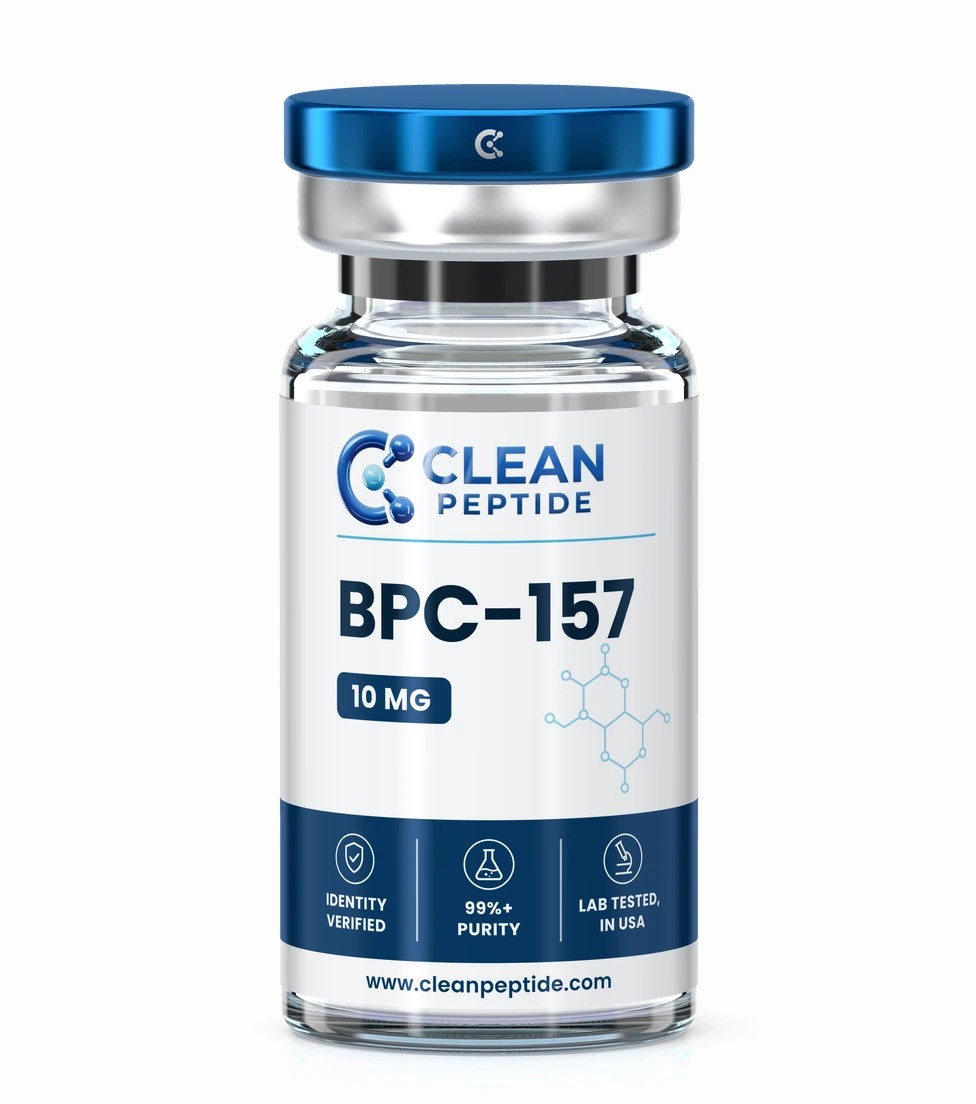
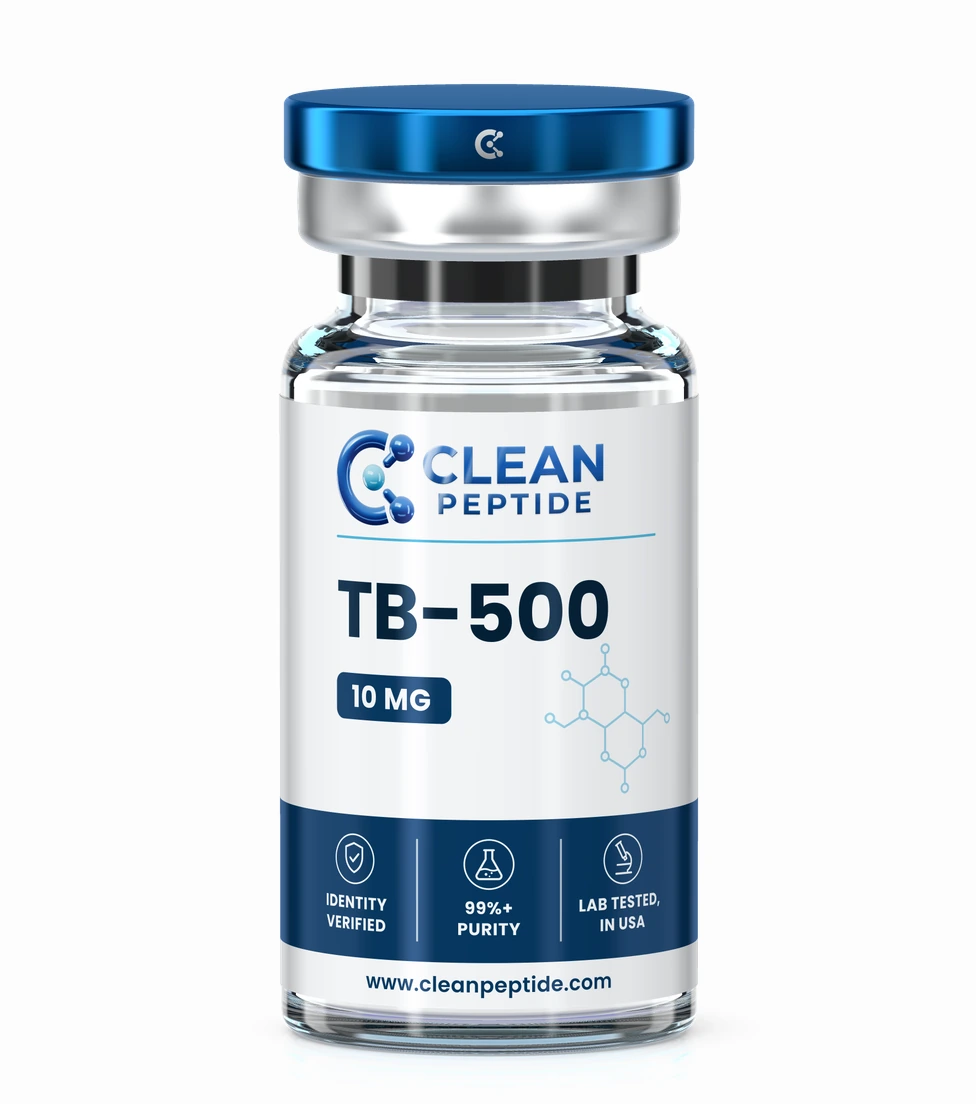
Clean Peptide stocks BPC-157 (10 mg and 20 mg), TB-500 (10 mg) and the BPC-157 / TB-500 blend. Every size ships against the certificate for its own lot, with lot number, laboratory, HPLC purity, measured content and identity on the product page.
The TB-500, blend and 10 mg BPC-157 lots are analysed by ILS Laboratories with a full QC panel; the 20 mg BPC-157 lot by Accurate Test Labs.


Question
Frequently Asked
What is the difference between BPC-157 and TB-500?
BPC-157 is a 15-residue peptide from a human gastric-juice protein. TB-500 is a 7-residue acetylated fragment of thymosin beta-4, the actin-binding region. They share no sequence.
Is TB-500 the same as thymosin beta-4?
No. Thymosin beta-4 is a 43-residue protein; TB-500 is a 7-residue piece of it, Ac-LKKTETQ. Most thymosin beta-4 research used the full protein.
Have BPC-157 and TB-500 been studied together?
In one published study: a 2026 exploratory rat study of Achilles tendon repair compared BPC-157, TB-500, both, and untreated controls.
What is the Wolverine stack?
The name for BPC-157 and TB-500 used together. Clean Peptide sells it as the BPC-157 / TB-500 blend, with each peptide's content measured on the certificate.
Are BPC-157 and TB-500 FDA-approved?
No. FDA placed both in its 503A category 2 in September 2023, later moved them to nominated-but-withdrawn, and in July 2026 proposed not adding them to the compounding bulks list. WADA prohibits both.
What are their molecular weights?
BPC-157 is 1,419.5 g/mol (C62H98N16O22, CAS 137525-51-0). TB-500 is 889.0 g/mol as the free base (C38H68N10O14, CAS 885340-08-9).
Research Peptides. Documented by Batch.
Every size in the catalogue ships against the certificate issued for its own lot.
For laboratory research use only. Not for human or veterinary use.
References
Identity data come from PubChem, the FDA substance registry (GSRS) and FDA's July 2026 briefing documents on BPC-157 and TB-500. Study descriptions follow the PubMed abstracts.
- Sikirić P, et al. A new gastric juice peptide, BPC. An overview of the stomach-stress-organoprotection hypothesis and beneficial effects of BPC Journal of Physiology (Paris), 1993. The discovering group's overview.
- He L, et al. Pharmacokinetics, distribution, metabolism, and excretion of body-protective compound 157, a potential drug for treating various wounds, in rats and dogs Frontiers in Pharmacology, 2022. Half-life under 30 minutes.
- Vasireddi N, et al. Emerging Use of BPC-157 in Orthopaedic Sports Medicine: A Systematic Review HSS Journal, 2025. 35 preclinical studies and 1 clinical.
- Safer D, et al. Thymosin beta 4 and Fx, an actin-sequestering peptide, are indistinguishable Journal of Biological Chemistry, 1991. Thymosin beta-4 binds G-actin.
- Esposito S, et al. Synthesis and characterization of the N-terminal acetylated 17-23 fragment of thymosin beta 4 identified in TB-500, a product suspected to possess doping potential Drug Testing and Analysis, 2012. What TB-500 is.
- Rahaman KA, et al. Simultaneous quantification of TB-500 and its metabolites in in-vitro experiments and rats by UHPLC-Q-Exactive orbitrap MS/MS and their screening by wound healing activities in-vitro Journal of Chromatography B, 2024. Metabolites; only Ac-LKKTE active.
- Biçer O, et al. Effects of BPC-157 and TB-500 on Achilles tendon healing in rats: A histopathological and biomechanical study Joint Diseases and Related Surgery, 2026. The only study of both.
- FDA Certain bulk drug substances for use in compounding that may present significant safety risks Category 2 history for BPC-157 and TB-500.