
MOTS-c vs SS-31: What’s the Difference?
MOTS-c and SS-31 are both called mitochondrial peptides and both are sold as research vials, but they have almost nothing else in common.
MOTS-c is a 16-residue peptide, MRWQEMGYIFYPRKLR, encoded by a short open reading frame inside the mitochondrial 12S rRNA gene. Cells make it themselves; a research vial holds a synthetic copy.
SS-31 (elamipretide) is a synthetic 4-residue peptide, D-Arg-Dmt-Lys-Phe-NH2, from the Szeto-Schiller series. It does not occur in nature, and it binds cardiolipin in the inner mitochondrial membrane.
In short: one is a peptide that mitochondria encode and that signals to the rest of the cell; the other is a designed tetrapeptide that stays at the inner membrane. They share no sequence.
MOTS-c vs SS-31 at a Glance
MOTS-c is a 16-residue peptide (C101H152N28O22S2, 2,174.6 g/mol) that cells make from mitochondrial DNA. SS-31 is a 4-residue synthetic peptide (C32H49N9O5, 639.8 g/mol as the free base) with a D-amino acid, a non-natural dimethyltyrosine and an amidated C-terminus. They share no sequence.
| Comparison | MOTS-c | SS-31 |
|---|---|---|
| Peptide length | 16 amino acids | 4 amino acids |
| Molecular weight | 2,174.6 g/mol | 639.8 g/mol (free base) |
| Sequence | MRWQEMGYIFYPRKLR | D-Arg-Dmt-Lys-Phe-NH2 |
| Molecular relationship | Encoded in the mitochondrial 12S rRNA gene | Synthetic, Szeto-Schiller (SS) peptide series |
| Main research focus | AMPK, folate cycle, nuclear gene regulation | Cardiolipin binding at the inner mitochondrial membrane |
| Research evidence | Cell and mouse studies; human work mostly measures natural MOTS-c | Cell and animal studies, and human clinical trials of elamipretide |
What are MOTS-c and SS-31
16 AA
MOTS-c
A naturally occurring peptide encoded not in the cell nucleus but in mitochondrial DNA, within the 12S rRNA gene. It was described in 2015.
Research areas
AMPK signalling • Folate cycle • Nuclear translocation under metabolic stress • Muscle and exercise models
In cells under glucose restriction, MOTS-c moved into the nucleus and regulated nuclear genes (Kim et al., 2018). A 2024 study reported that it binds and activates protein kinase CK2 (Kumagai et al.).
Explore MOTS-c4 AA
SS-31
A synthetic tetrapeptide of alternating aromatic and basic residues, with D-arginine, 2',6'-dimethyltyrosine (Dmt) and an amidated C-terminus, built to concentrate in the inner mitochondrial membrane.
Research areas
Cardiolipin binding • Cristae structure • Reactive oxygen species in isolated mitochondria • Ischaemia and ageing models
Also known as elamipretide, MTP-131 and Bendavia. As elamipretide it has been through human clinical trials, including in Barth syndrome and primary mitochondrial myopathy.
Explore SS-31Mitochondrial DNA: 12S rRNA geneShort open reading frameMOTS-c: 16 AA
SS-31 is synthetic and is not encoded by any gene
Key Differences Between MOTS-c and SS-31
| Key differences | MOTS-c | SS-31 |
|---|---|---|
| Origin | Natural: encoded by a short open reading frame in the mitochondrial 12S rRNA gene, described in 2015. |
Synthetic: designed in the Szeto-Schiller peptide series, first reported in 2004. |
| Structure | 16 L-amino acids, linear, free termini. |
4 residues: D-arginine, 2',6'-dimethyltyrosine, lysine and phenylalanine amide. |
| Where it acts in the research | Signals outward from the mitochondria: reported to move to the nucleus under metabolic stress, with AMPK and CK2 among its studied targets. |
Stays at the inner mitochondrial membrane, where it binds the phospholipid cardiolipin. |
| Research record | Cell and mouse studies; human studies mostly measure the body's own MOTS-c. |
Cell and animal studies, and human clinical trials of elamipretide. |
| Certificates on file | ILS Laboratories, 10 mg and 40 mg lots, full QC panel. |
ILS Laboratories, 10 mg and 50 mg lots, full QC panel. |
How their research profiles differ
- MOTS-c
- Encoded in mitochondrial DNA
- Signals to the cell and nucleus
- AMPK, folate cycle, CK2
- SS-31
- Designed synthetic tetrapeptide
- Binds cardiolipin
- Inner mitochondrial membrane
MOTS-c vs SS-31: Which Is Better?
There is no basis for ranking them. They are unrelated molecules studied with different questions, and we found no published study that compares them head to head.
MOTS-c is studied as a signal: a peptide that mitochondria encode and that acts elsewhere in the cell. SS-31 is studied as a membrane-targeted compound that stays where cardiolipin is. Which one fits depends on what a model is about.
Is the model about a mitochondria-encoded signalling peptide, or about a compound that binds cardiolipin in the inner membrane?
Can MOTS-c and SS-31 Be Studied Together?
They can be separate arms of the same study, since they are different molecules with different targets. We found no published study that combined them, and Clean Peptide does not sell them as a blend.
Each is sold as its own lyophilised vial with its own lot certificate. Our SS-31 COA guide sets out what to check on an SS-31 certificate.
There Isn’t One Universal “Winner”
MOTS-c
Mitochondria-encoded peptide
16 AA • signalling and metabolic-stress models
SS-31
Synthetic cardiolipin binder
4 AA • inner-membrane models
Compare the Research. Verify the Material.
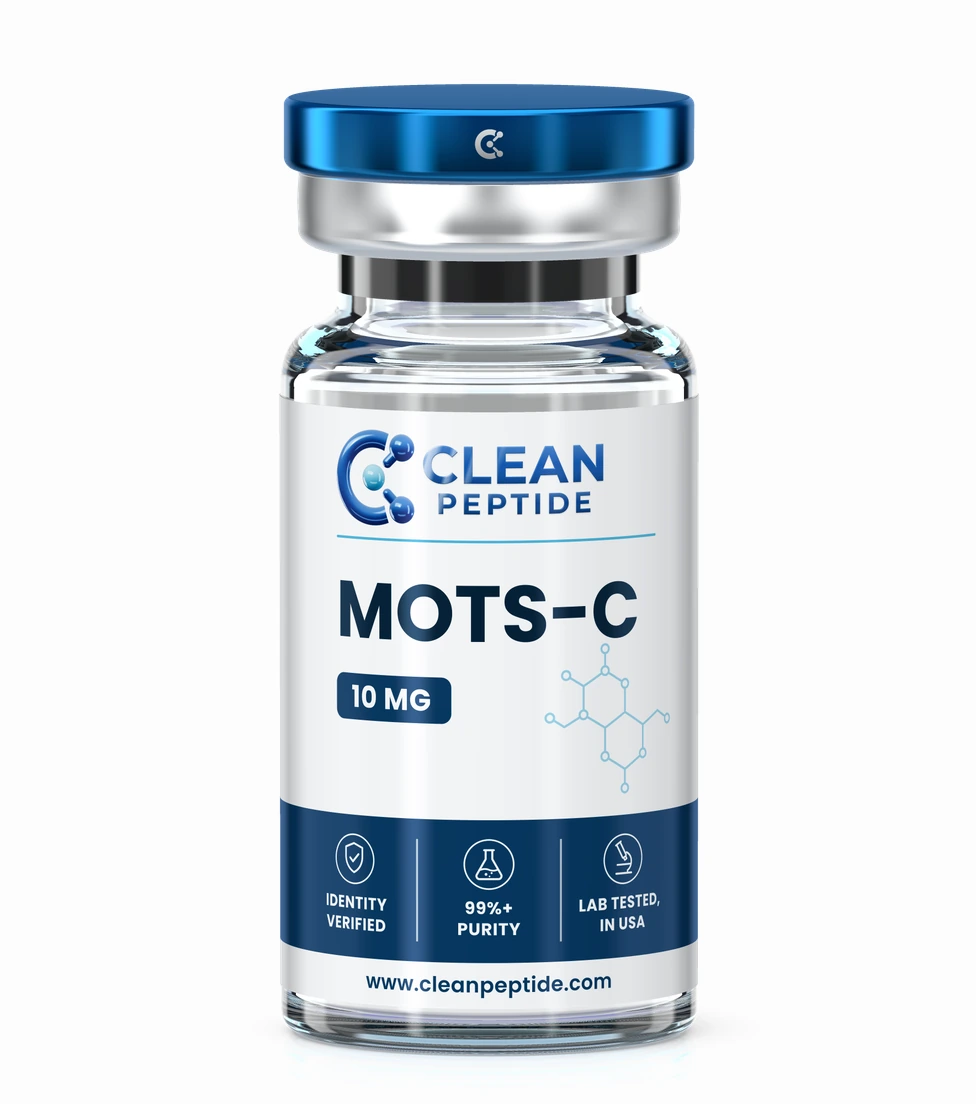
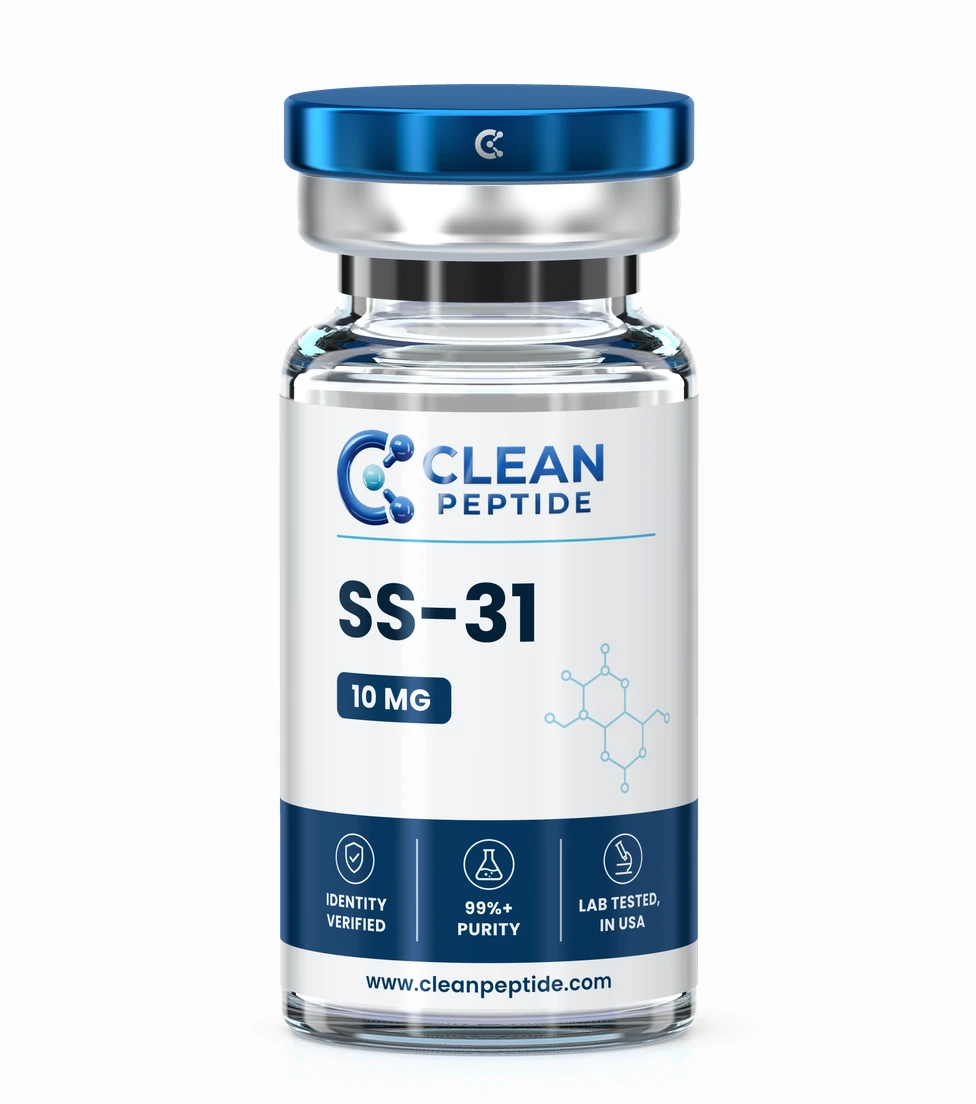
Clean Peptide stocks MOTS-c and SS-31 as lyophilised research vials. Every size ships against the ILS Laboratories certificate for its own lot, with HPLC purity, measured content, identity, a fentanyl screen, heavy metals, sterility and endotoxin.
Each lot's certificate is on the product page and in the COA library, with a link to ILS's own record.
 Research use only
 Identity
verified Purity
verified
 Research use only
- Identity
verified - Purity
verified
Question
Frequently Asked
What is the difference between MOTS-c and SS-31?
MOTS-c is a 16-residue peptide encoded in the mitochondrial 12S rRNA gene. SS-31 (elamipretide) is a synthetic 4-residue peptide, D-Arg-Dmt-Lys-Phe-NH2, that binds cardiolipin in the inner mitochondrial membrane. They share no sequence.
Is SS-31 a natural peptide?
No. SS-31 was designed in the Szeto-Schiller peptide series and contains a D-amino acid and a non-natural dimethyltyrosine. MOTS-c, by contrast, is made naturally from mitochondrial DNA.
Is SS-31 the same as elamipretide?
Yes. SS-31, elamipretide, MTP-131 and Bendavia are names for the same tetrapeptide.
How big are MOTS-c and SS-31?
MOTS-c has 16 residues and weighs 2,174.6 g/mol (C101H152N28O22S2). SS-31 has 4 residues and weighs 639.8 g/mol as the free base (C32H49N9O5).
Have MOTS-c and SS-31 been studied together?
We found no published study that compared or combined them. They are studied for different questions: mitochondrial signalling for MOTS-c, inner-membrane binding for SS-31.
Who tests Clean Peptide's MOTS-c and SS-31?
ILS Laboratories, an ISO/IEC 17025 accredited laboratory, issues a full QC panel certificate for each lot and size, covering purity, content, identity, a fentanyl screen, heavy metals, sterility and endotoxin.
Research Peptides. Documented by Batch.
Every size in the catalogue ships against the certificate issued for its own lot.
For laboratory research use only. Not for human or veterinary use.
References
Identity data come from PubChem, UniProt and the FDA substance registry (GSRS), as listed on our product pages. Study descriptions follow the PubMed abstracts.
- Lee C, et al. The mitochondrial-derived peptide MOTS-c promotes metabolic homeostasis and reduces obesity and insulin resistance Cell Metabolism, 2015. The paper that described MOTS-c and its open reading frame in the 12S rRNA gene.
- Kim KH, et al. The Mitochondrial-Encoded Peptide MOTS-c Translocates to the Nucleus to Regulate Nuclear Gene Expression in Response to Metabolic Stress Cell Metabolism, 2018. Nuclear translocation in cells.
- Kumagai H, et al. MOTS-c modulates skeletal muscle function by directly binding and activating CK2 iScience, 2024. CK2 as a binding partner.
- Zhao K, et al. Cell-permeable peptide antioxidants targeted to inner mitochondrial membrane inhibit mitochondrial swelling, oxidative cell death, and reperfusion injury Journal of Biological Chemistry, 2004. The SS peptide series.
- Birk AV, et al. The mitochondrial-targeted compound SS-31 re-energizes ischemic mitochondria by interacting with cardiolipin Journal of the American Society of Nephrology, 2013. Cardiolipin binding.
- Reid Thompson W, et al. A phase 2/3 randomized clinical trial followed by an open-label extension to evaluate the effectiveness of elamipretide in Barth syndrome, a genetic disorder of mitochondrial cardiolipin metabolism Genetics in Medicine, 2021. A human trial of elamipretide.