Where should you buy research peptides? From a supplier that lets you verify each lot before you pay: a certificate for the exact lot, a lot number that matches the vial, a named laboratory, and results that say how identity, purity and content were measured. The best peptide supplier is not the one with the biggest “99% pure” badge.
Before ordering research peptides, match the vial to its records, review the test data, and make sure the seller stays within a clear research-use-only role.
How Do You Choose a Reliable Peptide Supplier?
Choose a peptide supplier with a current, lot-specific Certificate of Analysis, a matching lot number, HPLC purity data, and an identity result that names its method: a retention-time match against a reference standard, mass spectrometry, or both. The listing should name the peptide, amount, form, storage needs, and research-only use.
Check who tested the sample and whether the report covers that exact lot. Price, reviews, and a purity banner cannot replace traceable records.
Reliable Peptide Supplier Checklist
| Check | What good looks like | Red flag |
|---|---|---|
| COA | Current lot, dates, methods, results, and lab |
One generic PDF |
| Traceability | Page, vial, and COA codes match |
Missing or different codes |
| Identity | Method named: retention-time match to a reference standard, MS, or both |
Identity claimed with no method, or a purity figure presented as identity |
| Purity | Method and chromatogram are available |
“99%” with no data |
| Peptide content | Separate assay states the amount measured |
Peak area treated as vial quantity |
| Product spec | Name, amount, form, and molecular details |
Vague target peptide listing |
| Handling | Product-specific storage and shipping |
One rule for all peptides |
| RUO status | Laboratory use with no human guidance |
Dosing or injection claims |
| Transparency | Named lab, clear policies, responsive support |
Anonymous tests or vague replies |
1. Look for a Batch-Specific Certificate of Analysis
A PDF called a “COA” is not enough. A useful peptide COA identifies the material tested. FDA drug-ingredient guidance offers a practical benchmark: name, batch, release date, tests, limits, numerical results, and authorized quality sign-off [1].
Look for:
- Product and sample names
- Batch or lot code
- Test and release dates
- Methods and numerical results
- Testing laboratory identity
The report must cover the lot for sale. A generic COA reused across batches offers weak traceability, even if it looks polished.
2. Make Sure the Lot Number Actually Matches
A legitimate COA matters only when it connects to the vial received. Compare the product, lot, amount, date, and sample ID across the page, label, and report. Batch codes link material with its production and distribution history [1]. If one character differs, ask the peptide vendor to explain before use.
3. Check Peptide Identity, Not Just Purity
Identity asks what the compound is. Purity asks how clean the detected sample appears. FDA guidance also treats identity, strength, quality, and purity as separate attributes [3].
What Does Peptide Identity Mean?
Mass spectrometry measures mass-to-charge signals. Those signals can be compared with the mass predicted from the peptide’s amino acid sequence and stated modifications. LC-MS or MS/MS may add evidence when closely related forms must be separated.
Why a Purity Percentage Is Not Enough
One large HPLC peak could still be the wrong material. A purity figure says how clean the detected profile is, not what the main peak is. Identity needs its own test: either a retention-time match against an authentic reference standard of the same peptide, or mass spectrometry. Regulatory guidance for drug substances treats a retention time alone as not specific enough and accepts combinations such as HPLC with MS as stronger [4]. Retention-time match is still a common identity test for research materials; ask which one a certificate used. Put simply, “99% pure” does not answer “99% of what?”
4. Understand What HPLC Purity Actually Means
A chromatogram plots detector response over time. Its main peak is usually assigned to the synthetic peptide, while smaller peaks may show related impurities.
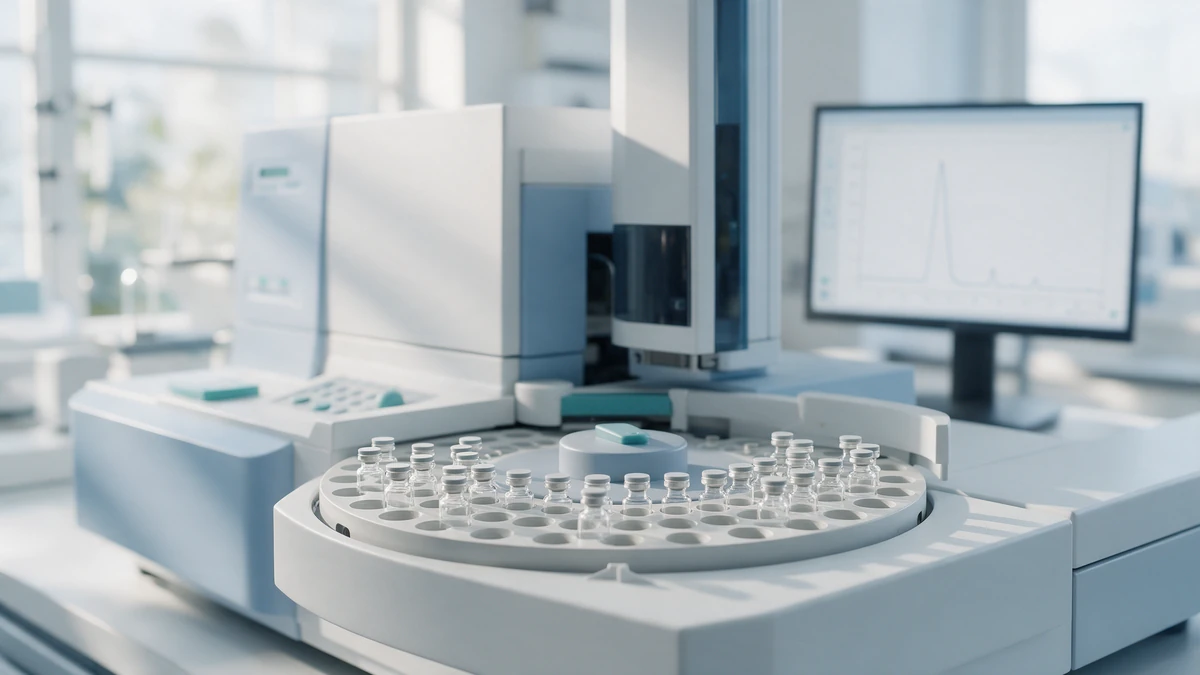
HPLC purity often means the main peak’s share of detected area under one method. It does not prove identity, exact vial quantity, sterility, or every contaminant.
Column, solvent gradient, wavelength, sample load, and peak integration can change the result. A sound method needs a clear purpose and evidence that it works as intended [2].
Important: HPLC purity ≠ identity ≠ peptide content.
5. Look for Appropriate Mass Spectrometry Data
MS compares expected molecular mass with an observed result, so it complements HPLC. In an FDA-authored study of three peptide drugs, LC-HRMS detected impurities below 0.1% and measured 0.1%, 0.3%, and 1% spikes with more than 85% accuracy [5].
| Test | Question | Useful data |
|---|---|---|
| HPLC | How clean is the detected profile? |
Method, chromatogram, main peak area |
| MS or LC-MS | Does measured mass support identity? |
Expected mass, observed result, spectrum |
6. Ask Whether the Testing Is Independently Verifiable
Third-party peptide testing can reduce a seller’s conflict of interest, but the label alone proves little. Check that:
- The testing lab is named, and the report can be verified.
- The sample ID matches the current lot.
- The date, method, chromatogram, or spectrum is visible.
- The lab can perform the reported work.
Independence matters most when you can check the source report, not just a cropped image.
7. Separate Purity, Identity, and Peptide Content
A multi-lab oxytocin study compared HPLC assay, quantitative NMR, and amino acid analysis because peptide content needs its own measurement [6].
| Attribute | Question | Example method |
|---|---|---|
| Identity | Is this the expected peptide? |
HPLC retention time against a reference standard, or MS / LC-MS |
| Purity | How clean is the detected profile? |
HPLC |
| Peptide content | How much peptide was measured? |
Quantitative assay |
| Named impurity | Is a specific residual present? |
Water, solvent, counterion, or endotoxin test |
This is basic quality control: verified purity does not prove the stated milligrams.
8. Evaluate Product and Supplier Transparency
Look for the exact name, amount, form, lot, COA, storage guidance, contact details, and shipping and return terms. Manufacturing origin, a peptide manufacturer name, or a US peptide manufacturing claim may add context, but none can ensure quality standards without records.
9. Check Research-Use-Only Positioning
Products labeled RUO should stay within a laboratory context, with no dosing, injection, cycle, or treatment advice. That applies to active peptides, peptide hormones, releasing hormone fragments, and other biologically active peptides.
In a June 2026 warning letter, FDA said “research use only” and “not for human consumption” labels did not outweigh site claims that showed intended human drug use [8]. A disclaimer cannot fix contradictory marketing.
10. Review Storage, Packaging, and Shipping Information
Reliable peptide companies provide product-specific storage details because peptides can respond differently to temperature, moisture, light, and time.
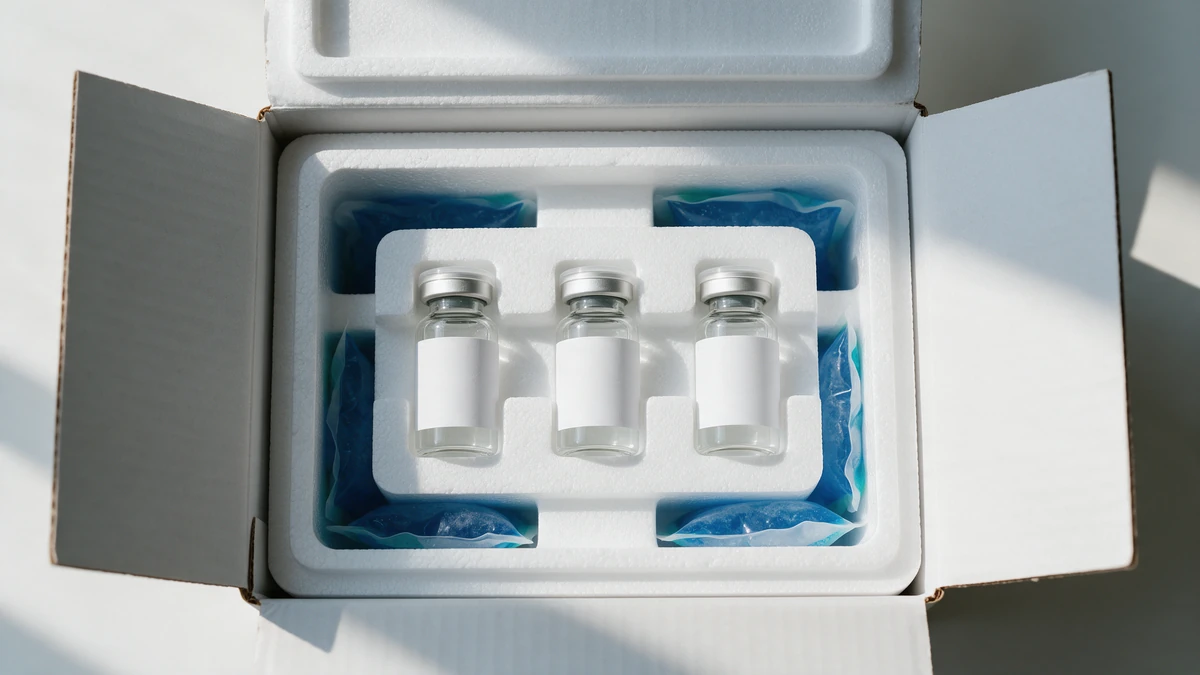
In one study, a lyophilized peptide stayed above 96% for four weeks at room temperature and up to 10 months at 5°C when protected from moisture. At 75% relative humidity, it absorbed water and formed aggregates [7]. Those numbers do not apply to all peptides. They show why clear handling instructions matter.
Also look for clear labels, sealed vials, lot details, shipping information, and support if a parcel arrives warm, wet, or broken.
Does a 99% Peptide Purity Claim Mean the Supplier Is Reliable?
No. A “99%+” banner is marketing until the data support it.
Check the method, chromatogram, lot, lab, and separate identity result. Ask whether the number means chromatographic peak area or something else. Verified purity is useful, but it is only one part of supplier review.
Does a COA Prove a Peptide Supplier Is Trustworthy?
No. A COA is only as strong as its data and traceability. Confirm the sample, lot, date, methods, lab, numerical results, and link to the item for sale. A current, verifiable report is useful. An anonymous or generic PDF is not.
Third-Party Testing vs. In-House Testing
Both can produce valid data. The main difference is independence, not automatic technical quality.
| Check | Third-party | In-house |
|---|---|---|
| Performed by | External lab |
Supplier or manufacturer |
| Independence | Usually higher |
Lower |
| Can be valid? | Yes |
Yes |
| Method and lot review needed? | Yes |
Yes |
Favor suitable, batch-specific records that can be checked, no matter where testing occurred.
Peptide Supplier Red Flags
Pause when the evidence does not match the sales pitch:
- No current COA: Only a generic claim appears.
- Lot mismatch: Vial and report do not connect.
- “99%” without context: No method or chromatogram.
- Purity presented as everything: Identity, content, and sterility differ.
- Anonymous testing: Lab, date, or sample is hidden.
- RUO conflict: Human dosing or injection guidance appears.
- Promised outcomes: Research materials carry treatment claims.
- Price-only pitch: Cheap or competitive pricing replaces evidence.
- Vague spec: You cannot tell what is being ordered.
- Vague answers: Support cannot explain its own records.
Questions to Ask a Peptide Supplier Before Ordering
- Can I see the COA for the current lot, and does its code match?
- How were identity, purity, and peptide content measured?
- Can I view the HPLC chromatogram and MS spectrum?
- Who tested it, when, and can I verify the report?
- Does the result mean chromatographic peak area?
- What storage and shipping conditions apply?
- Is the material only for laboratory research?
How to Compare Two Peptide Suppliers
| Factor | Supplier A | Supplier B |
|---|---|---|
| Current COA and matching lot | ✓ / ✕ |
✓ / ✕ |
| Identity and HPLC data | ✓ / ✕ |
✓ / ✕ |
| Peptide content result | ✓ / ✕ |
✓ / ✕ |
| Verifiable lab | ✓ / ✕ |
✓ / ✕ |
| Clear specs, storage, RUO, and support | ✓ / ✕ |
✓ / ✕ |
| Price | $ |
$ |
Key rule: Compare equivalent evidence first, then cost.
Is the Cheapest Peptide Supplier a Bad Choice?
Not always. Low cost does not prove poor quality, and a high price does not ensure high purity.
Compare the same peptide, amount, form, tests, traceability, storage, and service first. Competitive pricing matters only after those points are equal.
How CleanPeptide Approaches Research Peptide Verification
Good research starts with material you can trace. CleanPeptide provides lot-specific documentation that connects each research peptide with our HPLC purity results, mass spectrometry identity data, and reported peptide content.
That is what Research Peptides, Documented on Every Lot means in practice.
You can review the available evidence before ordering, confirm that the lot matches the records, and choose the right material for your research with more confidence.
Explore the CleanPeptide catalog, open the relevant product, and check its specifications and analytical documents before you buy.
Research Sources
- Q7A Good Manufacturing Practice Guidance for Active Pharmaceutical Ingredients
FDA guidance covering the manufacturing, testing, release, storage, and distribution of active pharmaceutical ingredients. It also explains batch identification, recordkeeping, laboratory controls, and Certificate of Analysis requirements. - Q2(R2) Validation of Analytical Procedures
FDA guidance on validating analytical procedures used to assess the identity, purity, strength, quality, and potency of drug materials. It covers accuracy, precision, specificity, range, detection limits, and other test performance measures. - Analytical Procedures and Methods Validation for Drugs and Biologics
FDA guidance on developing, documenting, and validating laboratory methods used for drugs and biological products. It describes the analytical information expected when testing identity, strength, quality, purity, and potency. - Q6A Specifications: Test Procedures and Acceptance Criteria
FDA guidance on selecting test procedures and setting acceptance limits for new drug substances and products. Topics include identity testing, impurity testing, assay methods, chromatographic procedures, and method selection. - Liquid Chromatography-High Resolution Mass Spectrometry for Peptide Drug Quality Control
Zeng K, et al. AAPS Journal, 2015. A laboratory study evaluating LC-HRMS for the identification and measurement of impurities in salmon calcitonin, bivalirudin, and exenatide. Researchers tested the method’s linearity, accuracy, precision, and ability to detect low-level peptide impurities. - Survey of Peptide Quantification Methods and Their Reproducibility Comparison: A Case Study Using Oxytocin
A multi-laboratory study comparing HPLC assay, quantitative nuclear magnetic resonance, and amino acid analysis for measuring oxytocin content. Researchers compared the reproducibility and practical strengths of each method. - Formulation for a Novel Inhaled Peptide Therapeutic for Idiopathic Pulmonary Fibrosis
Hengsawas Surasarang S, et al. Drug Development and Industrial Pharmacy, 2018. A formulation and stability study of the CSP7 peptide in liquid and lyophilized forms. Researchers examined how storage time, temperature, moisture, and humidity affected peptide stability and aggregation. - Warning Letter to Wholesale Peptide, June 17, 2026
An FDA warning letter addressing research peptides marketed with claims related to human use. The letter reviews product labeling, website statements, intended-use claims, and the regulatory limits of research-use-only disclaimers.