Thymosin Alpha-1 vs TB-500: Are They the Same?
No. Thymosin alpha-1 and TB-500 share the word thymosin, but they come from two unrelated proteins and share no sequence.
Thymosin alpha-1 (thymalfasin, Tα1) is a 28-residue peptide with an acetylated N-terminus, residues 2 to 29 of the protein prothymosin alpha. It was isolated from a calf-thymus extract in 1977.
TB-500 is a synthetic 7-residue peptide, Ac-LKKTETQ: residues 17 to 23 of thymosin beta-4, the actin-binding stretch of that 43-residue protein, with an acetyl group added. It is not full-length thymosin beta-4.
In short: the shared name comes from the thymus extracts in which both parent proteins were first found, not from any shared structure or function.
Thymosin Alpha-1 vs TB-500 at a Glance
Thymosin alpha-1 is a 28-residue peptide (C129H215N33O55, 3108.3 g/mol) from prothymosin alpha. TB-500 is a 7-residue fragment (C38H68N10O14, 889.0 g/mol as the free base) of thymosin beta-4. The two parent proteins are unrelated, and the two peptides share no sequence.
| Comparison | Thymosin Alpha-1 | TB-500 |
|---|---|---|
| Peptide length | 28 amino acids | 7 amino acids |
| Molecular weight | 3108.3 g/mol | 889.0 g/mol (free base) |
| Sequence | Ac-SDAAVDTSSEITTKDLKEKKEVVEEAEN | Ac-LKKTETQ |
| Molecular relationship | Residues 2-29 of prothymosin alpha | Residues 17-23 of thymosin beta-4, acetylated |
| Main research focus | Dendritic cells and Toll-like receptor signalling | Actin binding; analytical and metabolite studies |
| Research evidence | Cell and animal studies, and human clinical trials of thymalfasin | Analytical and rat metabolite studies; no human studies of TB-500 itself |
What are Thymosin Alpha-1 and TB-500
28 AA
Thymosin Alpha-1
A very acidic 28-residue peptide with an acetylated serine at the N-terminus, isolated by Allan Goldstein's group from 'thymosin fraction 5', a calf-thymus extract, in 1977. In 1984 the same sequence was found at the start of a larger protein, prothymosin alpha.
Research areas
Dendritic cell maturation • Toll-like receptor and MyD88 signalling • Interleukin-12 production in cell models
No dedicated receptor has been identified. Thymalfasin is the drug name for synthetic thymosin alpha-1; Clean Peptide's vial is a laboratory reference material.
Explore Thymosin Alpha-17 AA
TB-500
The actin-binding stretch of thymosin beta-4 on its own, Leu-Lys-Lys-Thr-Glu-Thr-Gln, with an acetyl group on the leucine. TB-500 is a common name rather than an official one; analytical laboratories identified exactly this peptide in TB-500 products in 2012.
Research areas
Identification in TB-500 products • Metabolites in rats • Actin binding of the parent protein
Most of the thymosin beta-4 literature, including its human trials, used the full 43-residue protein (CAS 77591-33-4), not TB-500. Findings for the protein cannot be carried over to the fragment.
Explore TB-500Thymosin beta-4: 43 residuesResidues 17-23, acetylatedTB-500: 7 AA
Thymosin alpha-1 comes from a different protein: residues 2-29 of prothymosin alpha
Key Differences Between Thymosin Alpha-1 and TB-500
| Key differences | Thymosin Alpha-1 | TB-500 |
|---|---|---|
| Parent protein | Prothymosin alpha (UniProt P06454); Tα1 is residues 2 to 29. |
Thymosin beta-4 (UniProt P62328), a 43-residue actin-sequestering protein; TB-500 is residues 17 to 23. |
| Structure | 28 residues, very acidic, N-terminal acetyl-serine, free C-terminal asparagine. |
7 residues, N-terminal acetyl-leucine; the free base or the acetate salt (949.1 g/mol). |
| Names | Thymosin alpha-1, thymalfasin (INN), Tα1. |
TB-500, Ac-LKKTETQ, thymosin beta-4 fragment (17-23). Not the same as thymosin beta-4. |
| Research record | Cell and animal studies on immune signalling, and decades of human clinical trials of thymalfasin. |
Analytical, doping-control and rat metabolite studies of the fragment; the larger literature is on the full thymosin beta-4 protein. |
| Certificates on file (October 2026) | Thymosin Alpha-1 10 mg, lot ACE-9487640, ILS Laboratories COA-2026-VZSPIG: 99.90% purity, 10.66 mg, identity by HPLC-RTM, endotoxin 0.101 EU/mL. |
TB-500 10 mg, lot ACE-7203111, ILS Laboratories COA-2026-SX28AC: 99.72% purity, 10.31 mg, identity by HPLC-RTM, endotoxin 0.058 EU/mL. |
Where each name comes from
- Thymosin Alpha-1
- Thymosin fraction 5 (calf thymus)
- Prothymosin alpha
- Thymosin alpha-1, 28 AA
- TB-500
- Calf thymus
- Thymosin beta-4, 43 AA
- TB-500, residues 17-23
Thymosin Alpha-1 vs TB-500: Which Is Better?
There is no basis for ranking them. They are unrelated molecules from unrelated proteins, studied for different questions.
Thymosin alpha-1 is studied as an immune-signalling peptide with a long clinical record under the name thymalfasin. TB-500 is a short actin-binding fragment whose own literature is mostly analytical; most thymosin beta-4 research used the full protein.
Is the work about prothymosin alpha's N-terminal peptide and immune signalling, or about the actin-binding fragment of thymosin beta-4?
Why Are They So Often Confused?
In the 1970s and early 1980s, Allan Goldstein's laboratory isolated several peptides from calf-thymus extracts and named them thymosins, after the gland, with Greek letters and numbers to tell them apart. The names describe where the peptides were found, not what they are. Thymosin alpha-1 and thymosin beta-4 later turned out to belong to unrelated protein families.
So a certificate, a paper or a product page should name the exact molecule: thymosin alpha-1 (thymalfasin), thymosin beta-4 (the 43-residue protein) or TB-500 (Ac-LKKTETQ). Our TB-500 vs BPC-157 comparison covers TB-500's other common pairing.
There Isn’t One Universal “Winner”
Thymosin Alpha-1
Prothymosin alpha peptide
28 AA • immune signalling research
TB-500
Thymosin beta-4 fragment
7 AA • actin-binding stretch
Compare the Research. Verify the Material.
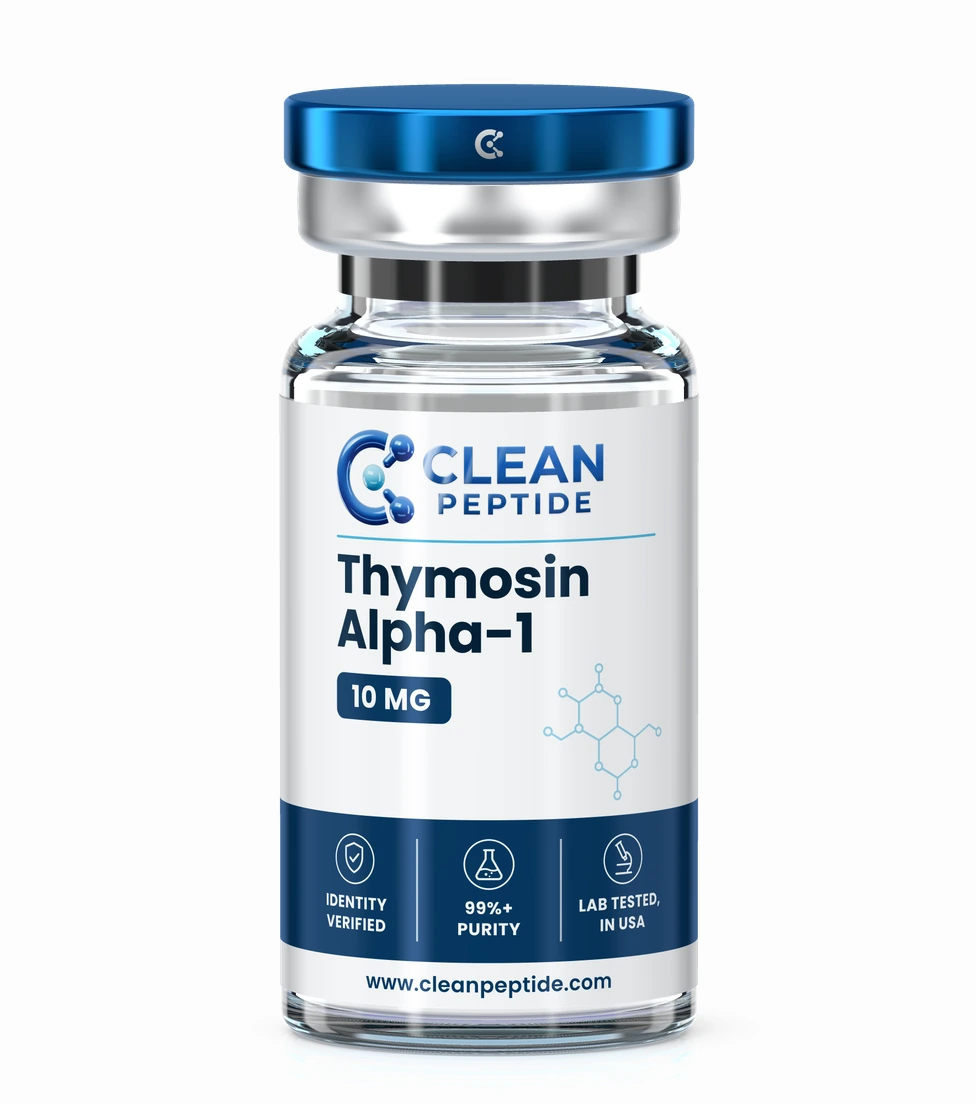
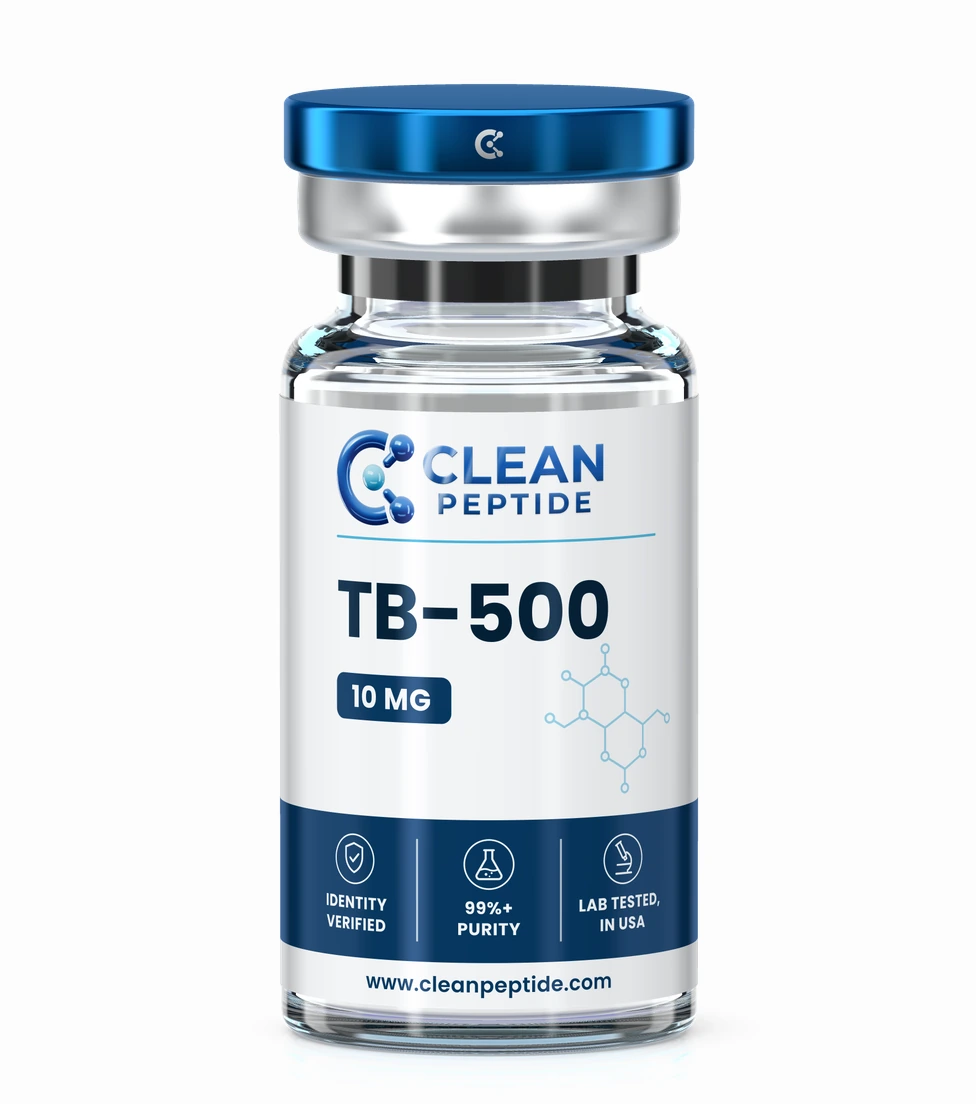
Clean Peptide stocks thymosin alpha-1 and TB-500 as 10 mg lyophilised vials. Each lot ships against its ILS Laboratories certificate, with HPLC purity, measured content, identity, a fentanyl screen, heavy metals, sterility and endotoxin.
Each lot's certificate is on the product page and in the COA library, with a link to ILS's own record.
 Research use only
 Identity
verified Purity
verified
 Research use only
- Identity
verified - Purity
verified
Question
Frequently Asked
Is thymosin alpha-1 the same as TB-500?
No. Thymosin alpha-1 is a 28-residue peptide from prothymosin alpha. TB-500 is a 7-residue acetylated fragment (Ac-LKKTETQ) of thymosin beta-4, an unrelated protein. They share no sequence.
Is TB-500 the same as thymosin beta-4?
No. Thymosin beta-4 is a 43-residue protein (CAS 77591-33-4). TB-500 is its residues 17 to 23 with an acetyl group (CAS 885340-08-9).
Why do thymosin alpha-1 and thymosin beta-4 have similar names?
Both were first found in calf-thymus extracts and named after the gland, with Greek letters and numbers to tell them apart. The names do not reflect structure: they belong to unrelated protein families.
Is thymosin alpha-1 the same as thymalfasin?
Yes. Thymalfasin is the drug name for synthetic thymosin alpha-1. Clean Peptide's thymosin alpha-1 is a laboratory reference material.
How big are thymosin alpha-1 and TB-500?
Thymosin alpha-1 has 28 residues and weighs 3108.3 g/mol (C129H215N33O55). TB-500 has 7 residues and weighs 889.0 g/mol as the free base (C38H68N10O14).
What do the thymosin alpha-1 and TB-500 certificates show?
October 2026, both from ILS Laboratories: thymosin alpha-1 10 mg, 99.90% purity and 10.66 mg; TB-500 10 mg, 99.72% purity and 10.31 mg; identity confirmed by HPLC retention time for both.
Research Peptides. Documented by Batch.
Every size in the catalogue ships against the certificate issued for its own lot.
For laboratory research use only. Not for human or veterinary use.
References
Identity data come from PubChem, UniProt and the FDA substance registry (GSRS), as listed on our product pages. Study descriptions follow the PubMed abstracts.
- Goldstein AL, et al. Thymosin alpha1: isolation and sequence analysis of an immunologically active thymic polypeptide Proceedings of the National Academy of Sciences, 1977. Isolation and sequence of thymosin alpha-1.
- Haritos AA, et al. Prothymosin alpha: isolation and properties of the major immunoreactive form of thymosin alpha 1 in rat thymus Proceedings of the National Academy of Sciences, 1984. The parent protein.
- Romani L, et al. Thymosin alpha 1 activates dendritic cells for antifungal Th1 resistance through toll-like receptor signaling Blood, 2004. Toll-like receptor signalling in dendritic cells.
- Low TL, et al. Complete amino acid sequence of bovine thymosin beta 4: a thymic hormone that induces terminal deoxynucleotidyl transferase activity in thymocyte populations Proceedings of the National Academy of Sciences, 1981. The 43-residue sequence of thymosin beta-4.
- Safer D, et al. Thymosin beta 4 and Fx, an actin-sequestering peptide, are indistinguishable Journal of Biological Chemistry, 1991. Thymosin beta-4 as the actin-sequestering peptide.
- Esposito S, et al. Synthesis and characterization of the N-terminal acetylated 17-23 fragment of thymosin beta 4 identified in TB-500, a product suspected to possess doping potential Drug Testing and Analysis, 2012. Ac-LKKTETQ identified in a TB-500 product.