A “NAD peptide” (or “NAD+ peptide”) is not a peptide at all. The name refers to NAD+, nicotinamide adenine dinucleotide: a dinucleotide coenzyme found in every living cell, built from two nucleotides joined by a pyrophosphate bridge rather than from amino acids. It is sold next to research peptides, which is where the name comes from.
Peptides are made from amino acids joined by peptide bonds. NAD+, by contrast, consists of nucleotide components connected through phosphate groups. The two may appear alongside each other in research catalogs, but they belong to fundamentally different molecular classes.
Quick answer: NAD+ is not a peptide. It is a naturally occurring dinucleotide coenzyme involved in cellular oxidation-reduction reactions and other NAD+-dependent processes. The phrase “NAD peptide” is commonly used online, but NAD+ is built from nucleotides, whereas peptides are chains of amino acids connected by peptide bonds.
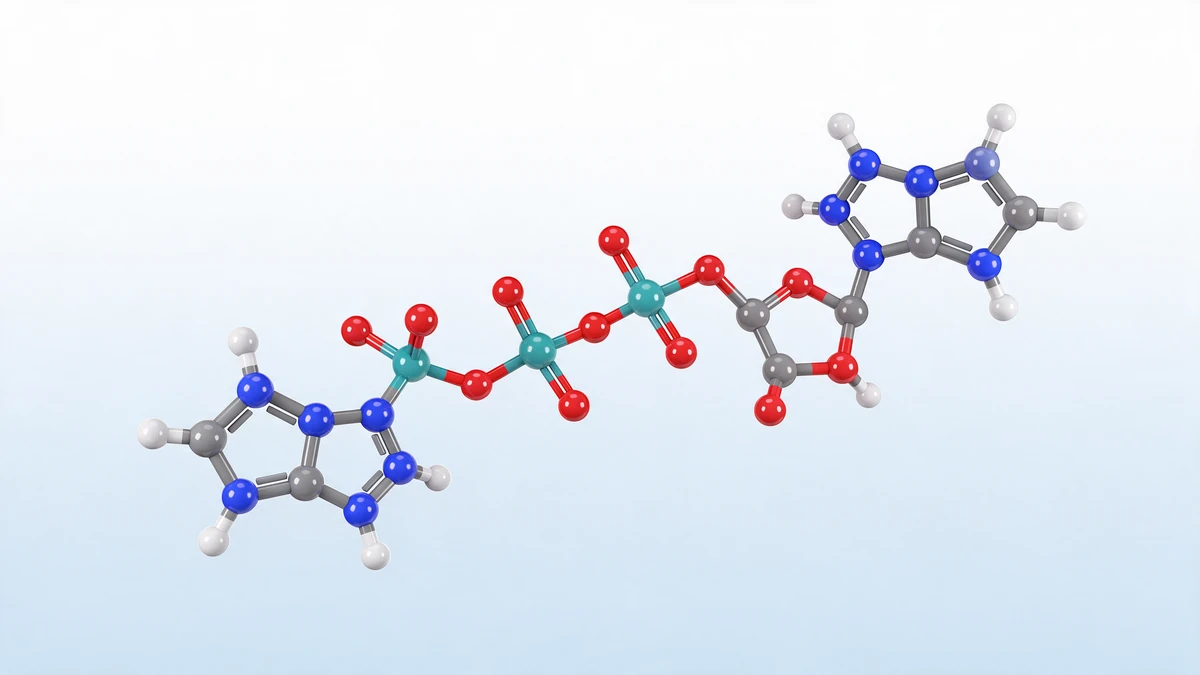
NAD+ and NADH at a glance
| NAD+ (oxidized) | NADH (reduced) | |
|---|---|---|
| Full name | Nicotinamide adenine dinucleotide |
Nicotinamide adenine dinucleotide, reduced |
| Class | Dinucleotide coenzyme |
Dinucleotide coenzyme |
| Molecular formula | C21H27N7O14P2 |
C21H29N7O14P2 |
| Molecular weight | 663.4 g/mol |
665.4 g/mol |
| CAS number | 53-84-9 |
58-68-4 |
| PubChem CID | ||
| Amino acids | None |
None |
Formula and weight for NAD+ are PubChem’s record CID 5892. PubChem also lists the protonated cation separately (CID 5893, C21H28N7O14P2+, 664.4 g/mol), so a figure quoted elsewhere may differ by one proton.
Clean Peptide does not stock NAD+ at the moment. This guide explains the compound; it has no price, certificate or order button. If you’d like us to carry NAD+, tell us on the contact page.
Related compounds we do stock, each with its own certificate of analysis: MOTS-C and SS-31, both studied in mitochondrial research.
What Is NAD+?
NAD+ stands for nicotinamide adenine dinucleotide. It is a coenzyme found throughout living cells and participates in numerous enzymatic reactions.
Chemically, NAD consists of two nucleotide components joined through a pyrophosphate linkage. One contains an adenine base, while the other contains nicotinamide. This structure is very different from an amino-acid chain.
NAD commonly exists in two interconnected redox forms:
- NAD+: the oxidized form
- NADH: the reduced form
During cellular oxidation-reduction reactions, NAD+ can accept reducing equivalents and become NADH. NADH can subsequently be oxidized back to NAD+, allowing the pair to function as an important electron-carrier system in cellular metabolism.
NAD+ also has another important role: it can serve as a substrate for NAD+-consuming enzymes involved in cellular regulation. These include sirtuins, poly(ADP-ribose) polymerases (PARPs), and CD38.
Why Is NAD+ Called a “Peptide”?
The simplest answer is that NAD+ is often grouped commercially with peptides even though it is not one.
Research suppliers and scientific communities may discuss NAD+ alongside peptide reference materials because both are used in laboratory investigations involving cellular signaling, metabolism, mitochondrial biology, and other research areas.
That proximity can create misleading terminology such as:
- NAD peptide
- NAD+ peptide
- NAD research peptide
But commercial categorization does not change molecular classification.
The National Library of Medicine defines peptides as compounds composed of amino acids joined by peptide bonds. NAD, meanwhile, is classified as a coenzyme composed of nucleotide components linked through pyrophosphate.
“NAD peptide” is therefore better understood as a search or commercial phrase, not a scientific description of NAD+.
NAD+ vs. Peptides: What Is the Difference?
The fundamental difference is what the molecules are made from.
| Feature | NAD+ | Peptide |
|---|---|---|
| Molecular class | Dinucleotide coenzyme |
Amino-acid chain |
| Building blocks | Nucleotide components |
Amino acids |
| Characteristic linkage | Phosphate/pyrophosphate linkage |
Peptide bonds |
| Amino-acid sequence | No |
Yes |
| Biological functions | Redox cofactor and enzyme substrate |
Varies by peptide |
| Example | NAD+ |
BPC-157 |
Peptides can vary enormously in sequence, length, structure, and biological role. What defines them chemically is the presence of amino acids joined by peptide bonds.
NAD+ does not meet that definition.
For a deeper explanation of amino acids and peptide bonds, see What Is a Peptide?
What Does NAD+ Do in Cells?
NAD+ participates in multiple cellular processes, but two functions are particularly important: redox chemistry and NAD+-dependent enzyme activity.
NAD+ in Redox Reactions
One of NAD+’s best-established roles is functioning as an electron carrier.
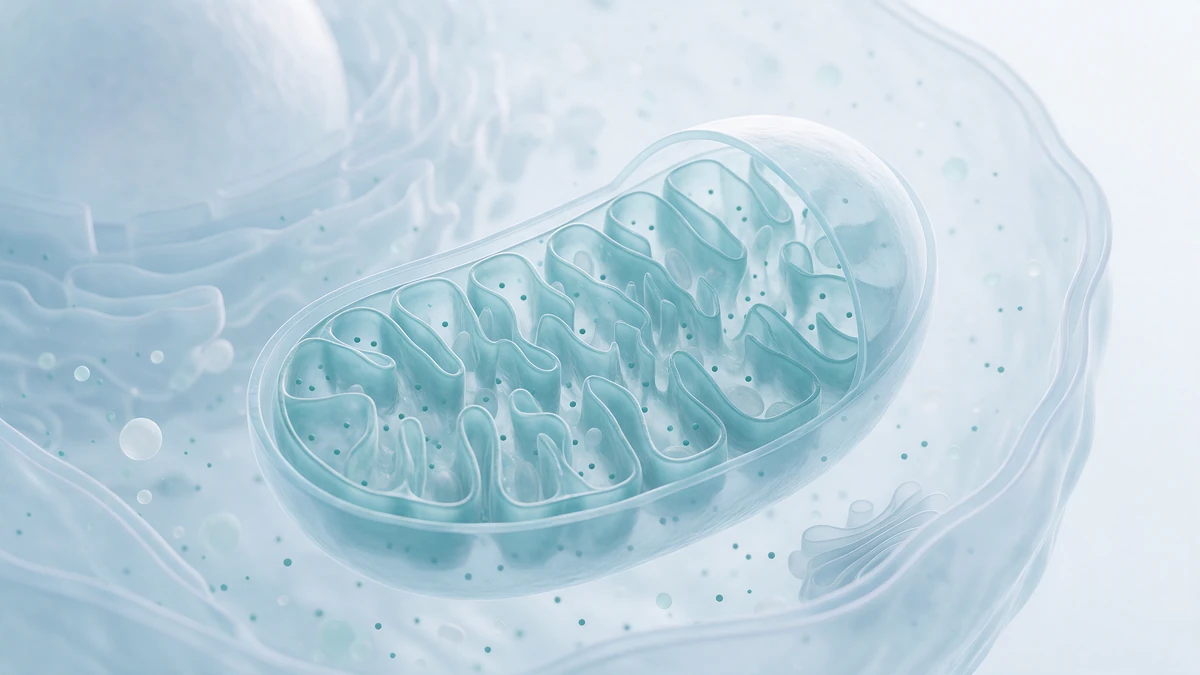
In oxidation-reduction reactions, NAD+ can accept reducing equivalents to become NADH. NADH can then participate in other metabolic reactions, including pathways connected with mitochondrial energy metabolism.
This is why it is more precise to say:
NAD+ participates in cellular energy metabolism.
Rather than:
NAD+ “gives cells energy.”
NAD+ itself is part of the biochemical machinery through which cells transfer electrons and carry out metabolic reactions.
NAD+ as an Enzyme Substrate
NAD+ is also consumed by several enzyme families.
These include:
- Sirtuins
- PARPs
- CD38/CD157
- SARM1
Through these pathways, NAD+ metabolism intersects with research involving gene regulation, genomic stability, stress responses, mitochondrial biology, inflammation, and cellular signaling.
This second role is important because NAD+ is not simply an electron carrier. Its availability can also influence NAD+-dependent biochemical pathways.
What Is the Difference Between NAD+ and NADH?
NAD+ and NADH are two redox states of the same coenzyme system.
NAD+ is the oxidized form. During certain metabolic reactions, it accepts reducing equivalents and is converted to NADH, the reduced form.
In simplified form:
NAD+ → accepts reducing equivalents → NADH
NADH can later be oxidized:
NADH → NAD+
This cycling allows NAD+/NADH to transfer electrons between biochemical reactions. The balance between the two forms is an important part of cellular redox metabolism.
NADH should therefore not be treated as another name for NAD+. They are closely related forms of the same redox pair, but their oxidation states differ.
What Are NAD+ Precursors?
NAD+ precursors are compounds that can contribute to the cellular pathways through which NAD+ is synthesized.
Frequently discussed examples include:
- Nicotinamide (NAM)
- Nicotinamide riboside (NR)
- Nicotinamide mononucleotide (NMN)
- Nicotinic acid
- Tryptophan
These molecules participate at different points in NAD+ biosynthetic pathways. NR and NMN, in particular, have received considerable research attention as approaches for modifying cellular NAD+ availability.
However:
NAD+ ≠ NMN ≠ NR.
They are chemically distinct molecules.
Likewise, NMN and NR are not peptides. Their relationship to NAD+ comes from NAD+ metabolism and biosynthesis rather than peptide chemistry.
Why Do Researchers Study NAD+?
NAD+ attracts scientific interest because it sits at the intersection of several fundamental cellular processes.
Research areas include:
- Cellular redox balance
- Energy metabolism
- Mitochondrial biology
- Sirtuin activity
- PARP activity
- DNA-damage responses
- Cellular stress signaling
- NAD+ biosynthesis and consumption
- Metabolic changes associated with aging
NAD+ research has expanded considerably as scientists have learned more about enzymes that consume NAD+ and pathways that regulate its production. Reviews describe NAD+ as both a central metabolic cofactor and a substrate involved in signaling processes mediated by sirtuins, PARPs, CD38, and related enzymes.
These areas of scientific interest should not be confused with established clinical outcomes from increasing NAD+ in humans. Findings depend on the model, tissue, intervention, and experimental conditions.
Does NAD+ Decline With Age?
Age-related changes in NAD+ metabolism are an active research area, but the evidence requires some nuance.
Animal and preclinical research has frequently reported lower NAD+ availability with aging. Human data are less comprehensive.
A 2025 review in Nature Metabolism found that consistent evidence of an age-related NAD+ decline in humans comes from only a limited number of studies and emphasized that NAD+ dynamics can differ between tissues. It also noted that human trials of NAD+-precursor interventions have so far shown limited efficacy compared with the promise suggested by preclinical research.
An earlier critical review reached a similar conclusion: the widespread statement that NAD+ universally declines with age is stronger than the available human evidence supports, particularly when differences between tissues and cell types are considered.
A more accurate summary is therefore:
Age-associated changes in NAD+ have been observed, particularly in experimental models, but the magnitude and consistency of NAD+ decline in humans remain tissue- and context-dependent.
What human studies have actually tested
Most human research in this area does not give NAD+ itself. It gives NAD+ precursors, mainly nicotinamide riboside (NR) and nicotinamide mononucleotide (NMN), and measures what happens to NAD+ and related metabolites:
- In mice and in a first-in-human pharmacokinetic study, single oral doses of nicotinamide riboside raised NAD+ metabolites in a dose-dependent way. Nicotinamide riboside is uniquely and orally bioavailable in mice and humans, Trammell et al., Nature Communications, 2016.
- A randomised, placebo-controlled crossover trial in healthy middle-aged and older adults reported that six weeks of nicotinamide riboside was well tolerated and stimulated NAD+ metabolism. Chronic nicotinamide riboside supplementation is well-tolerated and elevates NAD+ in healthy middle-aged and older adults, Martens et al., Nature Communications, 2018.
- A 10-week randomised, placebo-controlled trial of NMN in postmenopausal women with prediabetes measured insulin-stimulated glucose disposal by clamp and reported an increase after NMN but not after placebo. Nicotinamide mononucleotide increases muscle insulin sensitivity in prediabetic women, Yoshino et al., Science, 2021 (NCT03151239).
These are precursor studies. Their results describe NR and NMN in specific study populations, not NAD+ supplied as a material, and the 2025 Nature Metabolism review cited below concludes that human precursor trials have so far shown limited efficacy.
Is NAD+ the Same as a Research Peptide?
No.
NAD+ and research peptides may both be supplied as laboratory research materials, but they are chemically different.
A research peptide is built from amino acids connected by peptide bonds. NAD+ is a dinucleotide coenzyme made from nucleotide components.
That difference matters because analytical documentation should reflect the actual compound being evaluated. Researchers should not assume that terminology, testing approaches, or specifications appropriate for one molecular class automatically apply to another.
In other words:
Research use is an intended-use category. It is not a chemical classification.
What Should Researchers Check When Evaluating NAD+ Research Material?
The same documentation-first principle used when evaluating peptide reference materials applies to NAD+, but the analytical methods should be appropriate for NAD+ itself.
Researchers should look for:
- Clearly stated compound identity
- Lot or batch number
- Lot-specific Certificate of Analysis
- Appropriate identity testing
- Reported purity and the method used
- Quantitative content where available
- Material form and specifications
- Storage requirements
- Research-use designation
The most important point is traceability.
A headline purity percentage has limited value if researchers cannot determine which lot was tested, which method produced the result, or whether the documentation corresponds to the material currently being supplied.
The analytical evidence should follow the lot.
For a broader framework on evaluating research-material suppliers, see Where to Buy Research Peptides: 10 Checks.
Key Takeaway
NAD+ is not a peptide. It is nicotinamide adenine dinucleotide, a dinucleotide coenzyme involved in cellular redox reactions and NAD+-dependent enzyme activity.
The phrase “NAD peptide” persists because NAD+ is frequently discussed and sold alongside peptide research materials, but the underlying chemistry is different. Peptides are composed of amino acids joined by peptide bonds; NAD+ is built from nucleotide components.
For research purposes, NAD+ should therefore be evaluated as its own molecular class, with compound-specific identity, specifications, testing, and lot documentation.
Related reading on Clean Peptide:
- 5-Amino-1MQ, an NNMT inhibitor studied for its effect on cellular NAD+ and SAM
- SLU-PP-332, another small molecule that is often sold as a “peptide”
- MOTS-C and SS-31, mitochondrial research peptides with per-lot certificates
- How to read a certificate of analysis
Research Sources
- NAD: NCBI Medical Subject Headings (MeSH)
National Library of Medicine definition describing NAD as a coenzyme composed of nucleotide components joined through a pyrophosphate linkage and its NAD+/NADH redox function. - Peptides: NCBI Medical Subject Headings (MeSH)
National Library of Medicine definition of peptides as compounds made from amino acids joined by peptide bonds. - NAD+ Metabolism: Bioenergetics, Signaling and Manipulation for Therapy
Yang Y, et al., Biochimica et Biophysica Acta, 2016. Review covering NAD+ in cellular metabolism and its roles as a substrate for sirtuins, PARPs, CD38, and related signaling pathways. - NAD+ Metabolism: Pathophysiologic Mechanisms and Therapeutic Potential
Xie N, et al., Signal Transduction and Targeted Therapy, 2020. Review of NAD+ biosynthesis, redox metabolism, and NAD+-consuming enzymes including sirtuins, PARPs, CD38/CD157, and SARM1. - NAD+ Metabolism and the Control of Energy Homeostasis
Cantó C, et al., Cell Metabolism, 2015. Review of NAD+ metabolism, precursor pathways, mitochondrial biology, and the relationship between NAD+ availability and cellular metabolic regulation. - NAD+ Precursor Supplementation in Human Ageing: Clinical Evidence and Challenges
Vinten KT, et al., Nature Metabolism, 2025. A review examining human evidence for age-related NAD+ decline and clinical research involving NAD+ precursors, while highlighting major limitations in the current evidence. - Age-Dependent Decline of NAD+: Universal Truth or Confounded Consensus?
Peluso A, et al., Nutrients, 2021. Critical review examining whether NAD+ universally declines with aging and emphasizing the limited, tissue-specific nature of much of the available human evidence. - NAD+ in aging, metabolism, and neurodegeneration
Verdin, Science, 2015. Review describing NAD+ as a coenzyme for redox enzymes and a co-substrate for sirtuins and poly(ADP-ribose) polymerases. - Therapeutic Potential of NAD-Boosting Molecules: The In Vivo Evidence
Rajman, Chellappa and Baur, Cell Metabolism, 2018. Review of the in vivo, largely animal, evidence on molecules that raise NAD+. - NAD+ metabolism and its roles in cellular processes during ageing
Covarrubias, Perrone, Grozio and Verdin, Nature Reviews Molecular Cell Biology, 2021. Review of NAD+ as a redox coenzyme and as a cofactor for sirtuins, CD38 and PARPs. - NAD: PubChem CID 5892 and NADH: PubChem CID 439153
Formula, molecular weight and CAS numbers used in the table above.