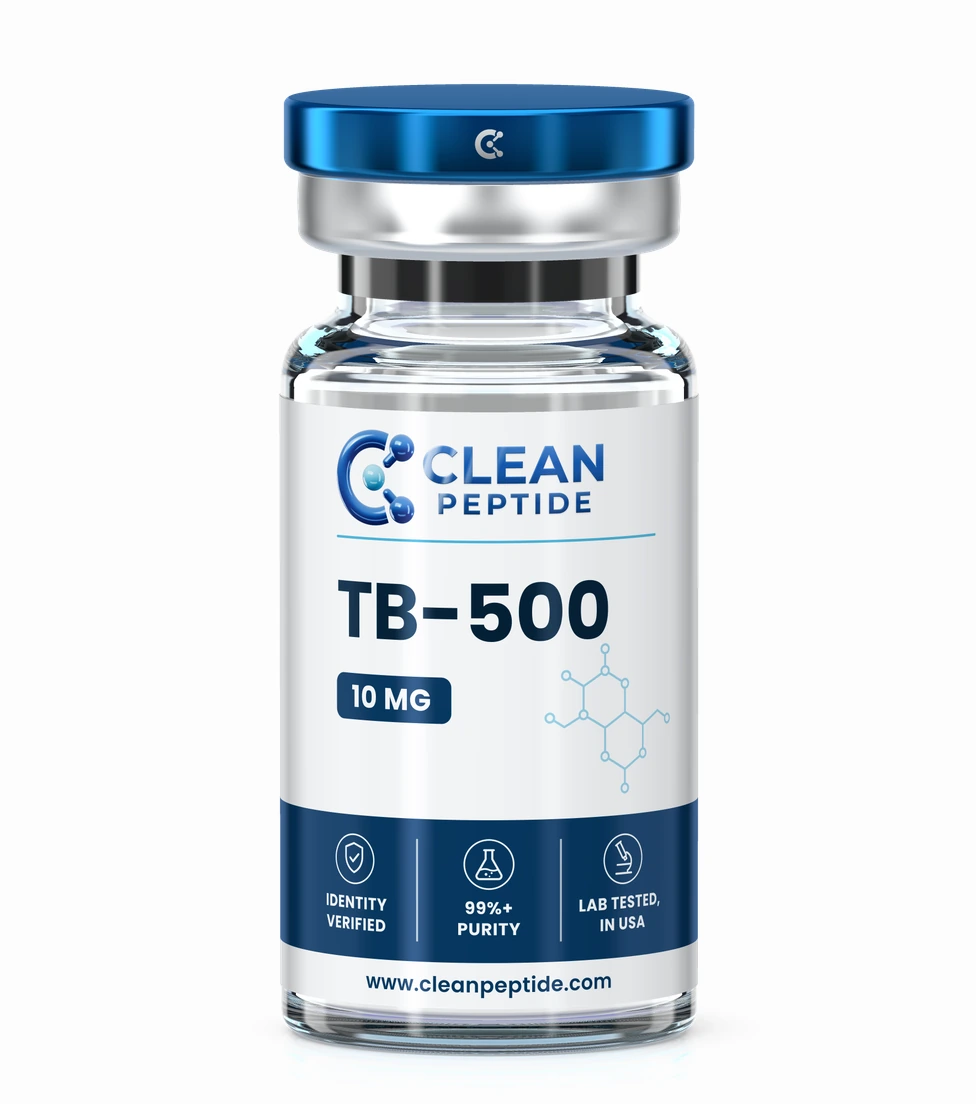


TB-500 Thymosin beta-4 fragment
TB-500 is a synthetic seven-residue peptide, Ac-Leu-Lys-Lys-Thr-Glu-Thr-Gln (Ac-LKKTETQ): the N-acetylated actin-binding fragment of thymosin beta-4, residues 17–23. This TB-500 peptide comes as a 10 mg lyophilised vial, and each lot's ILS Laboratories certificate reports its HPLC purity, net content and identity.
- Order within 15h 46m · ships TueCutoff 3:00 PM ET (12:00 PM PT)
- Arrives Thu, Oct 29 – Tue, Nov 3Free standard shipping on orders over $100
- Free shipment protectionLost, stolen, or damaged? We replace it, on us.
- Overnight and 2-day optionsPick your speed at checkout
- We acceptSecure 256-bit checkout
Verified test results
Every batch, independently verified.
Each batch is analyzed by an ISO/IEC 17025 accredited third-party laboratory before it ships. This is the released report for the size selected above, exactly as the lab signed it.
Certificate of analysis
99.72%
Purity by HPLC
- Lot
- ACE-7203111
- Tested
- Sep 18, 2026
- Labeled
- 10mg
- Measured
- 10.31mg
Full QC panel
5 passed · 2 reportedPurity
HPLC · spec ≥ 95.0%
Net Peptide Content
Identity
HPLC-RTM
Fentanyl Screen
Heavy Metals
ICP-MS
Sterility
PCR
Endotoxin
USP <85>
What is TB-500?
Thymosin beta-4 (Tβ4) is a 43-residue protein found in almost every human cell, where it holds monomeric G-actin out of the filament pool. Its sequence was worked out in Allan Goldstein’s laboratory in 1981, and in 1991 it turned out to be the same peptide as “Fx”, the main actin-sequestering peptide of human platelets. The stretch LKKTETQ, in the middle of the protein, is the part that binds actin.
TB-500 is that stretch on its own, with an acetyl group on the leucine. It is a common name rather than an official one: FDA describes TB-500 as a synthetic seven-amino-acid fragment of thymosin beta-4 (residues 17–23) acetylated at the N-terminus, and analytical labs identified exactly Ac-LKKTETQ in TB-500 products in 2012. It is not full-length thymosin beta-4, even though some websites use the two names interchangeably. Most of the “thymosin beta-4” literature, including the wound and eye trials, was done with the full 43-residue protein.
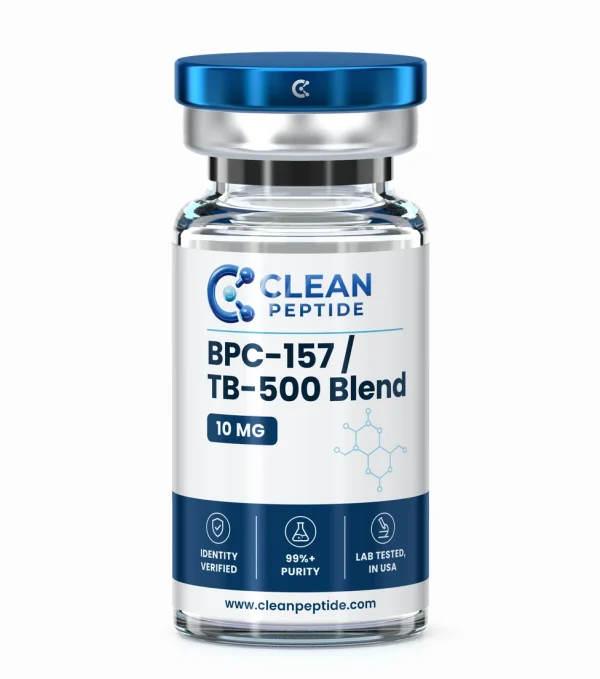
TB-500 is usually discussed next to BPC-157, and the two are sold together as the “Wolverine” blend. See TB-500 vs BPC-157 and the Wolverine stack.
TB-500 identity
| Names | TB-500, TB500, TB 500; thymosin beta-4 fragment (LKKTETQ); Ac-LKKTETQ |
|---|---|
| Sequence | Ac-LKKTETQ (Ac-Leu-Lys-Lys-Thr-Glu-Thr-Gln-OH) |
| Parent protein | Thymosin beta-4, 43 residues, UniProt P62328 (residues 17–23 of the mature protein) |
| Length | 7 residues, N-terminal acetyl |
| Molecular formula | C38H68N10O14 (free base) |
| Molecular weight | 889.0 g/mol (free base); 949.1 g/mol as the acetate |
| CAS number | 885340-08-9 (TB-500); full-length thymosin beta-4 is 77591-33-4 |
| PubChem CID | 62707662 |
| This product | 10 mg, lyophilised powder |
Sources: FDA’s July 2026 briefing document on TB-500, the FDA substance registry (GSRS), PubChem and Esposito S, et al., 2012.
Certificate for the current lot
The current TB-500 lot was analysed by ILS Laboratories in San Diego, which states ISO/IEC 17025 accreditation for activities within its published scope. Identity is confirmed by HPLC retention time against a reference standard, and the full QC panel also reports endotoxin, sterility, heavy metals by ICP-MS and a fentanyl screen:
| Size | Lot | Laboratory | Analysed | HPLC purity | Measured content | Identity |
|---|---|---|---|---|---|---|
| 10mg | ILS Laboratories | 18 Sep 2026 | 99.72% | 10.31mg | Confirmed |
Transcribed from the certificate issued for each size on sale today. Open the signed certificate for any size under Verified test results above. Every TB-500 COA, lot by lot
Published research
Two literatures sit under this name: a small one on TB-500 itself, mostly analytical, and a large one on the full thymosin beta-4 protein. They are listed separately here.
TB-500 (Ac-LKKTETQ)
- Identification in a TB-500 product (2012). High-resolution mass spectrometry found the N-acetylated 17–23 fragment of thymosin beta-4 in a TB-500 formulation; the authors synthesised it as a reference and proposed a plasma and urine test for sports doping control. Synthesis and characterization of the N-terminal acetylated 17-23 fragment of thymosin beta 4 identified in TB-500, a product suspected to possess doping potential. Esposito S, et al. Drug Testing and Analysis, 2012.
- Detection in horses (2012). A doping-control method detected TB-500 and its metabolites in equine plasma and urine after a single administration, described as the first such identification in post-administration samples. Ho EN, et al. Journal of Chromatography A, 2012.
- Metabolites and scratch assays (2024). In rats the main early metabolite was Ac-LK, and Ac-LKK was still detectable at 72 hours. In fibroblast scratch assays only the metabolite Ac-LKKTE, not the parent peptide, differed significantly from control, and the authors note that effects of TB-500 itself had not been documented. Rahaman KA, et al. Journal of Chromatography B, 2024.
- Rat Achilles tendon model (2026). An exploratory study in 32 rats compared repaired tendons treated with BPC-157, TB-500, both, or neither, and measured load to failure and histology scores at four weeks. Effects of BPC-157 and TB-500 on Achilles tendon healing in rats: A histopathological and biomechanical study. Biçer O, et al. Joint Diseases and Related Surgery, 2026.
Full-length thymosin beta-4
- Sequence (1981). 43 residues with an acetylated N-terminus, from calf thymus. Low TL, et al. PNAS, 1981.
- Actin sequestering (1991). Thymosin beta-4 formed a 1:1 complex with actin monomers and inhibited polymerisation. Thymosin beta 4 and Fx, an actin-sequestering peptide, are indistinguishable. Safer D, et al. Journal of Biological Chemistry, 1991.
- The actin-binding motif in endothelial assays (2003). The seven-residue actin-binding sequence (unacetylated LKKTETQ) was about as active as the whole protein in endothelial-cell migration and vessel-sprouting assays. The actin binding site on thymosin beta4 promotes angiogenesis. Philp D, et al. FASEB Journal, 2003.
- Rat skin wound model (1999). Full-length Tβ4, topical or intraperitoneal, measured by re-epithelialisation, contraction and collagen deposition. Thymosin beta4 accelerates wound healing. Malinda KM, et al. Journal of Investigative Dermatology, 1999.
- Human trials of the full protein. A phase 2 venous-ulcer trial of topical Tβ4 in 73 patients and a phase 2 trial of RGN-259 eye drops in 9 patients with severe dry eye. Guarnera G, et al., 2010; Sosne G, et al., 2015.
FDA found no clinical studies of TB-500 itself in humans.
Regulatory status
TB-500 is not an approved drug anywhere. FDA placed “thymosin beta-4, fragment (LKKTETQ)” in its 503A compounding category 2 (substances that may present significant safety risks) on 29 September 2023; the page now lists it, as TB-500, among substances nominated and then withdrawn. At its July 2026 Pharmacy Compounding Advisory Committee meeting FDA proposed that TB-500 not be added to the list of bulk substances pharmacies may compound with, citing no human exposure data. WADA’s Prohibited List names “thymosin-β4 and its derivatives, e.g. TB-500”. FDA compounding safety-risk list; WADA Prohibited List. Clean Peptide’s TB-500 is a laboratory reference material only.
Related research
- BPC-157 / TB-500 blend (the “Wolverine” blend) and BPC-157.
- TB-500 vs BPC-157 and the Wolverine stack explained.
- GLOW and KLOW, blends that include TB-500.
- BPC-157 and TB-500 research peptides.
What is on file, and how it is handled
Every figure below is transcribed from the paperwork for this compound.
Material
- Compound
- TB-500
- Class
- Thymosin beta-4 fragment (17-23), N-acetylated
- Form
- Lyophilised powder
- Sizes
- 10mg
- Sequence
- Ac-LKKTETQ (Ac-Leu-Lys-Lys-Thr-Glu-Thr-Gln-OH)
- Formula
- C38H68N10O14
- CAS
- 885340-08-9
- Mol. weight
- 889.0 g/mol
- Residues
- 7
Verification
- Identity
- Confirmed on the certificate of analysis
- Purity
- ≥ 99.72% by HPLCSee certificate
- Batch
- ACE-7203111See certificate
- Documentation
- Per-batch certificate of analysis
Handling
- Storage
- Store at −20 °C, protected from light
- Intended use
- In-vitro laboratory research only
QuestionsTB-500: frequently asked
What is TB-500?+
TB-500 is the synthetic peptide Ac-LKKTETQ: residues 17-23 of thymosin beta-4, its actin-binding region, with an acetyl group on the N-terminal leucine. FDA uses that definition, and labs identified exactly this peptide in TB-500 products in 2012.
Is TB-500 the same as thymosin beta-4?+
No. Thymosin beta-4 is a 43-residue protein (CAS 77591-33-4); TB-500 is a 7-residue fragment of it (CAS 885340-08-9). Most published thymosin beta-4 research, including the human wound and eye trials, used the full protein.
What is the TB-500 molecular weight?+
889.0 g/mol for the free base, C38H68N10O14 (PubChem CID 62707662). The acetate salt is 949.1 g/mol.
What is the difference between TB-500 and BPC-157?+
They are unrelated peptides. TB-500 is a 7-residue fragment of thymosin beta-4; BPC-157 is a 15-residue sequence from a human gastric-juice protein. They are often studied and sold together, as in the BPC-157 / TB-500 blend.
Is TB-500 FDA-approved?+
It is not approved anywhere. FDA lists it among substances withdrawn from its 503A compounding nominations and in July 2026 proposed not adding it to the compounding bulks list. WADA prohibits it in sport.
What does the TB-500 certificate show?+
The current lot’s ILS Laboratories certificate, listed on this page, gives the lot number, test date, HPLC purity, net peptide content and identity by HPLC retention time against a reference standard.
Related products
-
Research use only−30%
 Healing Research Peptides
BPC-157
Original price was: $64.39.$45.07Current price is: $45.07.Learn more about BPC-157 -
Research use only−30%
 Neuropeptides
Adamax Spray
Original price was: $109.99.$76.99Current price is: $76.99.Learn more about Adamax Spray -
Research use only−30%
 Healing Research Peptides
KPV
Original price was: $52.89.$37.02Current price is: $37.02.Learn more about KPV -
Research use only−30%
 Healing Research Peptides
BPC-157 / TB-500 Blend
Original price was: $77.99.$54.59Current price is: $54.59.Learn more about BPC-157 / TB-500 Blend